
When electronic devices are in operation, they frequently generate electromagnetic interference (EMI). This interference not only disrupts the device's own normal functioning but can also interfere with signal transmission in surrounding equipment, potentially leading to device malfunctions or degraded performance. For instance, devices ranging from industrial frequency converters to household washing machines may experience operational instability due to EMI.
The common mode choke is one of the core components used to suppress such interference; it specifically filters out common mode noise within a circuit, thereby ensuring the stable operation of the device. Among the various materials used for choke cores, nanocrystalline materials have gradually emerged as the preferred choice.
Traditional choke core materials are mostly ferrites, while nanocrystalline materials, with their unique microstructure, perform better in terms of magnetic permeability and loss control, and are especially suitable for the needs of high-frequency and miniaturized equipment. Therefore, they are widely used in various high-end electronic devices.
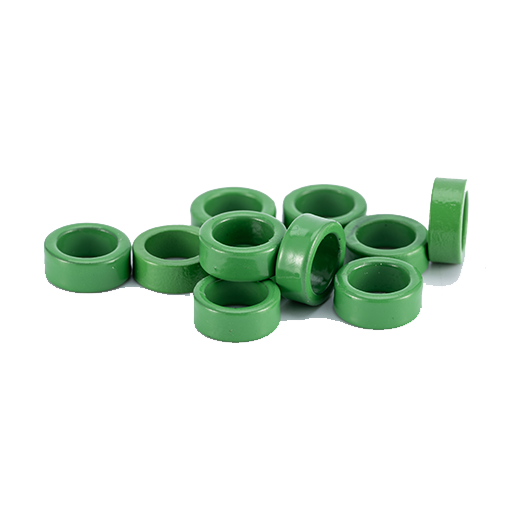
A common mode choke (CMC) is an inductive component designed to suppress common mode interference. It typically consists of two coils—each with an equal number of turns and wound in opposite directions—coiled around a single magnetic core. Its primary function is to distinguish between useful signals and interference noise within a circuit, allowing only normal differential mode signals to pass while blocking common mode interference.
The defining feature of a nanocrystalline common mode choke lies in its nanocrystalline core. This core is composed of an amorphous alloy containing elements such as iron, silicon, and boron. Through a process involving rapid solidification followed by low-temperature annealing, a nanoscale grain structure is formed (with grain sizes typically ranging from 10 to 20 nm), resulting in a "nanocrystalline + amorphous" dual-phase structure.
This unique microstructure endows the nanocrystalline core with distinct magnetic properties that differ significantly from those of traditional ferrite cores. While ferrite cores are ceramic-based materials with an initial magnetic permeability typically ranging from 100 to 10,000, nanocrystalline cores boast an initial magnetic permeability that can reach between 20,000 and 100,000—a level five to ten times higher than that of ferrite. In terms of saturation magnetic flux density, nanocrystalline cores can reach 1.2–1.3 T—significantly higher than the 0.3–0.5 T typical of ferrites. This implies that, for a given volume, nanocrystalline cores can store more magnetic energy and withstand higher currents without easily reaching saturation. Furthermore, the high-frequency losses of nanocrystalline cores are substantially lower than those of ferrites; in the 500 kHz frequency range, their loss per unit volume is only about one-third that of ferrites.
The core operating logic of a nanocrystalline common mode choke lies in utilizing the interplay between its coils and magnetic core to specifically suppress common mode currents. Two coils, wound in opposite directions, are connected to the device's input and output lines respectively, forming a symmetrical structure; this symmetry is the key to its ability to distinguish between differential mode and common mode signals.
When the device is operating normally, the lines primarily carry differential mode currents—that is, the currents required for the device's proper functioning. These currents generate magnetic fluxes in the two coils that flow in opposite directions and thus cancel each other out; consequently, there is virtually no net magnetic flux within the core. As a result, the choke presents a very low impedance to differential mode signals, ensuring that normal signal transmission remains unaffected.
However, when common mode interference currents appear in the circuit, they flow through both coils simultaneously. The magnetic fluxes generated by these currents flow in the same direction and superimpose within the core to form a strong magnetic field. According to the impedance formula Z = 2πfL, the core's high magnetic permeability causes the choke to present an extremely high impedance, thereby impeding the flow of common mode currents and effectively attenuating or filtering out the interference signals.
The ability of nanocrystalline materials to achieve high magnetic permeability stems from their unique microscopic structure. The nanoscale grains are tightly packed and exhibit favorable magnetic anisotropy; following a carefully controlled annealing process, the magnetic domains are distributed uniformly. When subjected to an external magnetic field, these domains respond rapidly, resulting in an exceptionally high effective magnetic permeability.
When common mode currents pass through the coils, they generate unidirectional magnetic fluxes within the core. These fluxes combine to form a strong magnetic field, which in turn generates a high inductance. This high inductance acts as a barrier to the common mode currents, making it difficult for the interference currents to pass through, and thus ensuring they are filtered out.
The low-loss characteristics of nanocrystalline materials are also closely linked to the dynamics of magnetic flux. Their coercivity is extremely low—typically less than 1 A/m—meaning that energy loss during the magnetization and demagnetization cycles is minimal; in other words, they exhibit low hysteresis loss. Furthermore, the nanoscale grain structure effectively segments the eddy current paths into minute regions, thereby significantly reducing eddy current losses—a key reason why these materials are more energy-efficient than traditional ferrites.
The impedance characteristics of nanocrystalline common-mode chokes vary with frequency—a key factor enabling their precise suppression of interference. For common-mode interference signals, especially mid-to-high frequency interference in the 100kHz-1MHz range, it exhibits extremely high impedance, which can effectively block interference current.
Conversely, for differential-mode signals—which represent the normal operating signals of a device and typically occur at lower frequencies—the choke presents very low impedance; thus, it does not impede the transmission of normal signals. This frequency selectivity allows the device to simultaneously filter out unwanted interference noise while ensuring the normal operation of the equipment.
Compared to ferrite chokes, nanocrystalline common-mode chokes offer a broader frequency response. While the magnetic permeability of ferrite drops sharply once it exceeds its "Snoek's Limit" (typically between 100 kHz and 500 kHz), nanocrystalline materials maintain a stable, high magnetic permeability within the frequency range below 1 MHz; furthermore, they retain a significant capacity for interference suppression even at frequencies exceeding 1 MHz.
High magnetic permeability and compact size are among the most prominent advantages of nanocrystalline common-mode chokes. Their initial magnetic permeability is significantly higher than that of ferrite or iron powder cores; consequently, for a given volume, they can generate higher inductance, leading to superior interference suppression.
Moreover, this high magnetic permeability facilitates a more compact design, thereby conserving installation space within the device and aligning with the industry trend toward the miniaturization of electronic equipment. For instance, in small switching power supplies, the physical volume of a nanocrystalline common-mode choke can be reduced by over 30% compared to its ferrite counterpart.
Low power loss and high thermal stability constitute other core advantages. Nanocrystalline materials exhibit minimal hysteresis and eddy current losses; consequently, they generate very little heat during high-frequency operation, thereby minimizing energy waste and limiting the overall temperature rise of the device. With a Curie temperature reaching approximately 570°C, the material demonstrates negligible variation in magnetic properties across a temperature range of -40°C to 125°C, making it well-suited for use in equipment deployed in harsh environments, such as those found in industrial and automotive applications.
When compared with other core materials, the advantages of nanocrystalline materials are clearly evident. Compared to ferrite, it exhibits lower high-frequency losses and superior resistance to saturation; compared to iron powder cores, it possesses higher permeability and offers more effective interference suppression, while also featuring a more compact form factor—eliminating the need to increase physical dimensions solely to prevent saturation.
Nanocrystalline common mode chokes are widely used in consumer electronics. Devices such as washing machines, air purifiers, and coffee makers generate a certain amount of EMI (electromagnetic interference) during operation. This interference not only affects the stability of the devices themselves but can also disrupt surrounding appliances, such as televisions and routers. Nanocrystalline common mode chokes filter out this interference, thereby preventing device malfunctions.
The field of industrial electronics represents another key application area. Industrial equipment such as switching power supplies (SMPS), frequency converters, and welding machines operate in complex environments with numerous sources of interference, many of which are high-frequency interference. Nanocrystalline common mode chokes effectively suppress both internal and external interference, ensuring stable equipment operation and minimizing downtime or failures caused by electromagnetic disturbances.
Applications within the automotive sector are also becoming increasingly prevalent, particularly in the DC/DC converters found in hybrid and electric vehicles, where stable current transmission is critical. Converter operation generates high-frequency interference that can disrupt the vehicle's internal electronic control systems; nanocrystalline common mode chokes suppress this interference to protect these control systems while simultaneously withstanding the extreme temperature fluctuations typical of automotive environments.
In the renewable energy sector, solar inverters and wind turbines generate high-frequency interference during the energy conversion process, which can compromise grid stability. Nanocrystalline common mode chokes filter out this interference, thereby enhancing energy conversion efficiency, ensuring stable grid operation, and meeting the evolving demands of the new energy industry.

When selecting a nanocrystalline common mode choke, the first consideration must be the device's operating frequency range. Interference occurring at different frequencies requires a choke with matching parameters; for instance, devices characterized primarily by high-frequency interference should utilize models exhibiting high impedance in the high-frequency band to ensure effective high-frequency noise filtration. Conversely, devices dominated by low-frequency interference may benefit from models featuring higher magnetic permeability.
The current rating is another critical factor that must not be overlooked. The maximum current drawn by the device during operation must not exceed the choke's rated current; failure to observe this limit can lead to overheating and potentially permanent damage to the choke. This is particularly important in high-current applications—such as industrial machinery and automotive systems—where close attention to the current rating parameter is essential to prevent operational disruptions caused by current overload.
Finally, the selection process should also take into account the specific thermal requirements of the device. If the device operates in a high-temperature environment—such as an automotive engine compartment or a high-temperature industrial workshop—it is necessary to select a nanocrystalline common mode choke with superior thermal stability. Furthermore, careful consideration must be given to the mounting method to ensure effective heat dissipation, thereby preventing performance degradation caused by excessive temperature rise.
Many devices feature unique structural designs and specific operational requirements that standard, off-the-shelf common mode chokes may be unable to satisfy. In such instances, OEM customization is the ideal solution; products can be custom-engineered based on the device's specific parameters—including available mounting space, frequency range, and current requirements—to ensure a perfect fit and seamless integration with the equipment.
The core working principle of the nanocrystalline common-mode choke is to specifically suppress common-mode EMI through the high magnetic permeability of the nanocrystalline core and the special winding method of the coil, while ensuring the normal signal transmission of the equipment. Its emergence has solved the shortcomings of traditional chokes in terms of high frequency, miniaturization, and low loss.
Today, as electronic devices are developing towards higher frequencies, smaller sizes, and higher reliability, the nanocrystalline common-mode choke, with its outstanding performance, has become a key component for suppressing EMI and is widely used in multiple fields such as household, industrial, automotive, and renewable energy, providing a guarantee for the stable operation of equipment.
For devices that pursue high stability and low loss, choosing a nanocrystalline common-mode choke can effectively enhance the reliability of the equipment, reduce faults caused by interference, and is an ideal choice for EMC design in high-frequency electronic devices.
Please feel free to contact us for more information
Email: info@bidragon.com
Whatsapp: https://wa.me/8613373703313