
In 2024, the amorphous alloy industry demonstrated robust growth momentum. Soft magnetic materials expanded across multiple sectors and applications with distinct characteristics, while significant progress was made in bulk amorphous alloys and amorphous coatings. Market demand for catalysts and welding materials also showed broader growth potential.
The soft magnetic materials sector achieved new developments. First, both production volume and output value of soft magnetic materials saw double-digit growth. Annual output of iron-based amorphous strips, nanocrystalline alloy strips, and amorphous (nanocrystalline) alloy powders all saw substantial increases. The output value of amorphous soft magnetic materials exceeded 20 billion yuan, marking a 35% year-on-year increase. Second, amorphous transformers established a “dual market” domestically and internationally. Domestic power grid tenders for amorphous transformers saw a significant increase compared to last year, while applications of amorphous dry-type transformers in off-grid projects like rail transit and communication base stations also grew substantially. Demand for amorphous transformers surged in Southeast Asia, South Asia, East Asia, and the Americas. Third, amorphous applications and new technology development achieved “dual synchronization.” The world's first mass-produced amorphous-carbon fiber super motor was successfully launched; China's first 4.5MW-class large-capacity 35kV amorphous alloy aluminum-wound box-type transformer was successfully commissioned at the Huaneng Shaanxi Mengjiawan Phase II photovoltaic project; Domestically, iron-based amorphous ribbon has been developed and manufactured at a width of 280mm; GAC Aion's amorphous motor-driven new energy vehicles have officially rolled off the production line, among other developments. Fourth, amorphous soft magnetic powder has emerged as a new contender. Since May, the scale and speed of demand growth for amorphous soft magnetic powder have been unexpectedly substantial. This surge did not occur overnight. Artificial intelligence and new energy applications demand high-power, low-loss, and high-efficiency equipment. Amorphous soft magnetic powder meets the requirements for high-frequency and miniaturization in all aspects. Companies have intensified development efforts in this area, and market applications are beginning to take shape. Chip inductors, in particular, are experiencing a boom. Over 10 new production lines have been launched domestically within a year, creating more opportunities for amorphous and nanocrystalline soft magnetic powders.
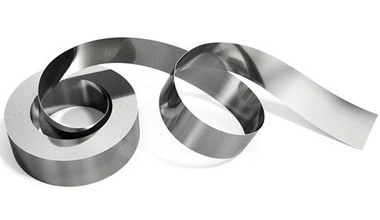
The overseas market for iron-based amorphous alloys has become more active. Overseas demand for China's iron-based amorphous strip continues to grow, with favorable export prospects for domestic strip products. India, South Korea, and Russia have emerged as major overseas markets for China. The nanocrystalline alloy industry has seen increased concentration, with accelerated market exit among small and medium-sized enterprises. By 2024, exports of various nanocrystalline alloy inductive components will show a significant increase. A wave of nanocrystalline alloy strip manufacturers expanding overseas emerged between 2022 and 2023. Chinese enterprises invested in nanocrystalline alloy production lines across Southeast Asia, East Asia, Europe, and the Americas. According to the Amorphous China Big Data Center, Chinese companies invested in approximately 15 overseas nanocrystalline production lines of various models, with an annual designed capacity of around 9,000 tons. However, actual production in 2024 fell below 3,000 tons.
Markets in other sectors remain small but highly competitive. The market for bulk amorphous alloy structural components is expanding rapidly, with consumer electronics still the primary market. Demand is strong for hinges in foldable smartphones, and applications also exist in high-end watch cases. While inroads are being made into fields like medical devices, mass production has yet to commence. Amorphous energetic composite materials are developing steadily, with only one company currently designated as a supplier. The investment boom in bulk amorphous alloys has subsided, with no new projects launched by enterprises for three consecutive years. By the end of 2024, eight domestic companies possessed the capability to produce high-quality zirconium-based bulk amorphous structural components, with an annual output value of approximately 1.1 billion yuan. The amorphous coating market has begun to rebound. In 2024, the Amorphous Alloy Materials Application Branch of the China Electrical Equipment Industry Association and Huazhong University of Science and Technology jointly convened the “First Amorphous Alloy Coating Industry Development and Technological Advancement Promotion Conference” in Wuhan. Demand signals from thermal power plants indicate a significant increase in China's amorphous coating usage compared to previous years. With accelerated industrial modernization and technological advancements, downstream demand for high-performance coatings continues to grow, ensuring sustained expansion in the amorphous coating market. Additionally, amorphous coatings demonstrate advantages in corrosion protection, structural reinforcement, and repair for metal components, revealing immense market potential. The development of cold spray technology warrants close attention. Currently, the effectiveness of China's cold spraying process for amorphous coatings has been validated, opening more avenues for large-scale application. It holds significant potential in fields such as corrosion resistance and wear protection for boiler surfaces, with the entire industry chain projected to exceed 1 billion yuan in output value by 2024. Amorphous alloy catalysts demonstrate superior catalytic performance compared to crystalline materials. They currently show promising applications in water resource treatment, potentially reducing the cost of hydrogen production via water electrolysis and accelerating the maturation of this technology. Nationwide, over 20 enterprises and 30 research institutes are engaged in amorphous catalyst R&D and production, primarily serving petrochemicals, pharmaceuticals, chemical fibers, and new energy hydrogen production. As new energy hydrogen production gains prominence, the amorphous catalyst industry is accelerating, attracting investor attention. Some traditional domestic alloy enterprises have also begun investigating the amorphous catalyst industrial chain. Amorphous brazing has achieved new milestones in high-end market application development.