
In the loss composition of distribution transformers, the core material is the dominant factor determining the no-load loss. With the continuous improvement of energy efficiency standards in the power industry and the enhanced awareness of energy costs, reducing transformer losses has become the core demand of the industry.
Amorphous alloy cores are not an experimental concept but a mature low-loss solution. Their core value stems from the breakthrough characteristics of the material itself, rather than surface process improvements. This essence determines their core position in energy efficiency upgrades.
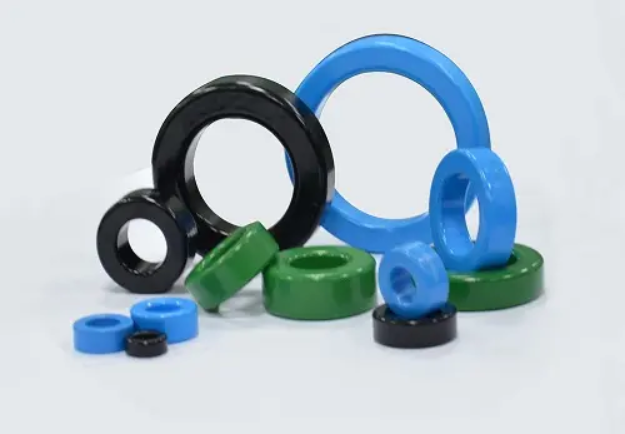
The core feature of amorphous alloy is its amorphous atomic structure. This unique structure directly affects the arrangement and movement mode of magnetic domains. Compared with traditional oriented electrical steel, the atomic arrangement of amorphous alloy does not have fixed crystal boundaries and lattice structures. This fundamental difference constitutes the watershed between the magnetic properties and loss performance of the two.
This structural difference is not a subtle performance optimization, but a fundamental transformation that has a decisive impact on the transformer core loss. It fundamentally changes the magnetic hysteresis and eddy current loss mechanism of the core material and is a true material-level revolution, rather than a gimmick at the process level.
Amorphous alloy has core magnetic properties of high magnetic permeability and low coercivity. The synergy of these two properties significantly reduces the hysteresis loss of the core in the power frequency operating condition. The reduction of hysteresis loss directly results from the smoother turning of magnetic domains in the magnetic field change, without the additional energy consumption caused by overcoming crystal boundaries and other structural obstacles.
At the same time, amorphous alloy adopts a thin strip structure, which can effectively suppress eddy current loss. The narrow width of the thin strip shortens the eddy current path and reduces the eddy current circulation area, thus achieving control of eddy current loss at the structural level without relying on additional processing treatments. The combination of high magnetic permeability, low coercivity, and thin strip structure builds the complete technical logic of amorphous alloy's low-loss performance.
The no-load losses of distribution transformers refer to the energy loss generated when the transformer operates at rated voltage in a no-load state, mainly consisting of core losses and independent of the load size. For transformers in the distribution network, they are mostly in light-load or idle standby states, so no-load losses (i.e., idle losses) become the dominant part of their energy consumption throughout their entire lifecycle.
The reason why amorphous alloy cores can achieve a significant reduction in no-load losses lies in their unique atomic structure and magnetic properties, which optimize the loss mechanism. From a quantitative perspective, compared to traditional oriented electrical steel cores, the no-load losses of amorphous alloy cores can be reduced to approximately one-third of those of traditional products.
This quantitative improvement is not a theoretical derivation but is based on the measured results of the material's magnetic properties - low coercivity directly reduces the value of magnetic hysteresis loss, and the thin strip structure significantly reduces the proportion of eddy current loss, and the combined effect achieves a leapfrog reduction in no-load losses, which is the core reason why this part becomes the most important content in the search and decision-making process of technical selection.
From the perspective of loss mechanisms, the losses of oriented electrical steel mainly result from the obstruction of crystal boundaries on the movement of magnetic domains (leading to higher magnetic hysteresis losses) and the relatively thick plate structure (resulting in larger eddy current losses); while amorphous alloys eliminate the obstruction of crystal boundaries through amorphous structure and suppress eddy current through thin strip structure. The difference in losses between the two materials stems from the different underlying mechanisms.
Under low magnetic flux density conditions, the performance advantages of amorphous alloys are more significant. Low magnetic flux density is a common operating state of distribution transformers, and the magnetic permeability advantage of oriented electrical steel cannot be fully exerted at this time, while amorphous alloys still maintain the low coercivity characteristic, further widening the loss gap.
At the engineering design level, there is a clear trade-off relationship between the two: Amorphous alloy cores have an absolute advantage in loss control, but they have specific requirements in terms of design adaptability, core weight, and manufacturing complexity; oriented electrical steel has an advantage in manufacturing process maturity and design flexibility, but its loss performance has a ceiling. This comparison focuses on the engineering characteristics themselves and does not involve price factors, providing a basis for purely engineering judgment.
Application adaptability of distribution transformers with amorphous alloy cores
Amorphous alloy cores have wide applicability in the field of distribution transformers, covering single-phase distribution transformers and three-phase industrial and commercial transformers. In single-phase transformers, their low no-load loss characteristics can effectively reduce the idle energy waste in the residential distribution network; in three-phase industrial and commercial scenarios, their stable magnetic properties can meet the requirements of continuous operation.
The key advantage lies in the performance stability under continuous energization conditions. Distribution transformers need to operate continuously without interruption, and the magnetic properties of amorphous alloy cores do not undergo significant attenuation due to long-term energization, ensuring stable loss control throughout their entire lifecycle, answering the core question of whether they can be used.
Amorphous alloy cores have extensive applicability in the field of distribution transformers, covering single-phase distribution transformers and three-phase commercial and industrial transformers. In single-phase transformers, their low no-load loss characteristics can effectively reduce the standby energy waste in the residential distribution network; in three-phase industrial and commercial scenarios, their stable magnetic properties can meet the requirements of continuous operation.
The key advantage lies in the performance stability under continuous energization conditions. Distribution transformers need to operate continuously without interruption, and the magnetic properties of amorphous alloy cores will not significantly deteriorate due to long-term energization, ensuring stable loss control throughout the entire life cycle, which answers the core question of whether it is applicable from the application perspective.
The manufacturing process of amorphous alloy requires strict requirements for the processing of thin strips and stacking accuracy. The flatness and stacking density of the thin strips directly affect the magnetic properties of the core. Any improper operation that causes structural defects may lead to an increase in losses.
This material is highly sensitive to stress, so the control of the annealing process is crucial. Reasonable annealing treatment can eliminate internal stresses generated during the manufacturing process, ensuring the stable performance of the magnetic properties.
In addition, the independent control of the core manufacturing process is crucial for design adaptability. Independent manufacturing can achieve precise matching of the core structure and the overall design of the transformer, avoiding size deviations or performance incompatibility caused by external procurement. This point enhances the professional credibility of the technical solution and breaks away from the single perception of merely promoting materials.
The application of amorphous alloy cores can significantly reduce standby energy waste in the distribution network. The reduction of no-load losses of transformers across the entire network will directly reduce total energy consumption, and thereby indirectly reduce the consumption of fossil fuels and carbon emissions.
This value is not based on predictions of future trends, but on verified practical results - its energy efficiency improvement effect fully aligns with the core goals of current global energy efficiency improvement and grid sustainability, and has clear practical application value.
Choosing amorphous alloy transformer cores is not driven by the pursuit of technological novelty, but based on their quantifiable no-load loss reduction effect, long-term stable energy efficiency performance, and reliable magnetic properties in continuous energized distribution systems.
Material science is the core factor determining the energy efficiency of transformers. The structural and performance advantages of amorphous alloy break through the loss bottleneck of traditional materials. The reduction of no-load losses has a cumulative effect at the network level, rather than being a local optimization of a single device. Therefore, amorphous alloy cores are the optimal choice based on engineering rationality.
The non-crystalline alloy transformer core, thanks to its unique magnetic properties brought about by the amorphous atomic structure, has achieved a significant reduction in no-load loss. It possesses core advantages such as strong continuous operation stability and a wide range of engineering adaptability.
The core logic of material selection stems from engineering rationality rather than gimmicky innovation. Its value not only lies in the energy efficiency improvement of a single device, but also in the energy conservation and sustainable development contributions at the network level. It precisely defines the design direction of energy efficiency-driven transformer cores.